

Judicial Commission Engages Civil Society, People with Disability Organisations and Academics to Strengthen the Analysis of Sexual Violence Crime Court Rulings



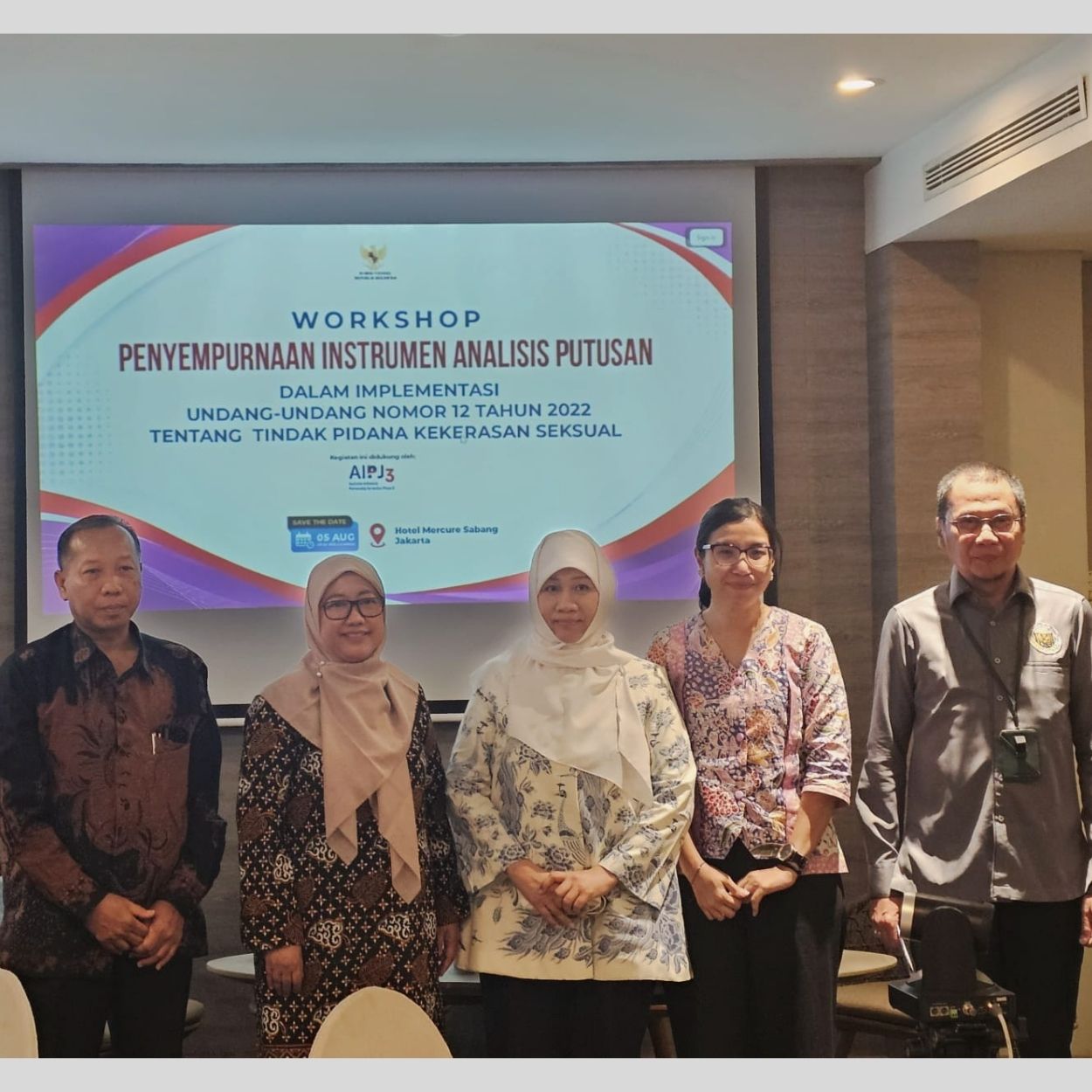
Indonesia’s Judicial Commission (Komisi Yudisial), with support from the Australia-Indonesia Partnership for Justice Phase 3 (AIPJ3), held a workshop in Jakarta on 5 August 2026 to refine an instrument for analysing judicial ruling related to the implementation of Law No. 12 of 2022 on Sexual Violence Crimes (UU TPKS). Under the Judicial Commission’s legal mandate, it has the authority to review legally binding court rulings including their format, legal reasoning and fulfilment of victims’ rights. The analysis does not seek to change or overturn judicial decisions.
Judicial Commission’s Secretary General Arie Sudihar in his opening speech cited data from Komnas Perempuan showing that 376, 526 gender-based violence cases were recorded in 2025, an increase of 14.07% from the previous year. This rise highlights the need for collaboration between stakeholders to prevent and address sexual violence, as implementation of the UU TPKS continues to face challenges at the investigation, prosecution, and trial stages.
“By drawing on the experience of civil society in providing support to victims as well as academics, the Judicial Commission can determine whether victims’ rights are being upheld, procedural law is being correctly applied, and court proceedings foster a sense of safety for the victims. The input and recommendations derived from today’s session can serve as the basis for developing a more comprehensive framework for judgment analysis activities within Judicial Commission,” said Arie.
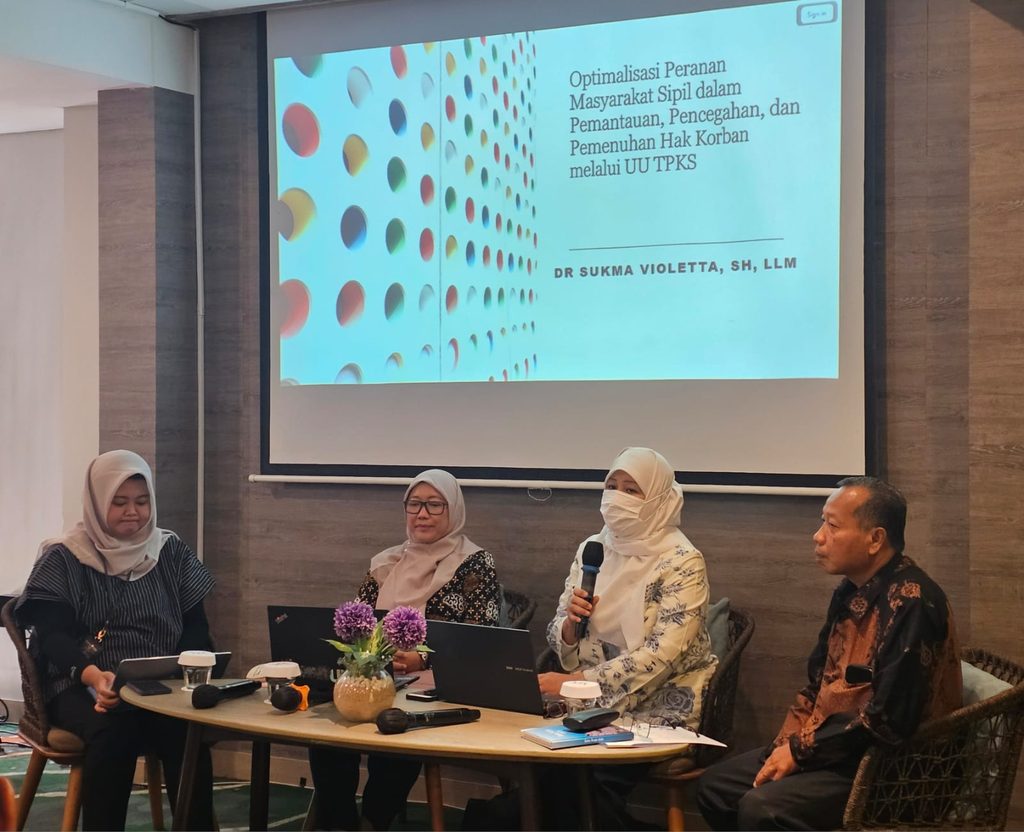
Meanwhile, F. Willem Saija—a Judicial Commission member serving as Head of the Human Resources, Advocacy, Legal, and Research & Development Division—stated that the workshop to refine the instrument for analysing judicial rulings related to the implementation of the UU TPKS also aims to assess the effectiveness of the application of both UU TPKS and the Criminal Code (KUHP).
At the same event, Parahyangan Catholic University’s lecturer Niken Safitri stated that court rulings represent both legal certainty and justice for victims and the perpetrators. Thus, judicial rulings serve as a means of evaluating how legislation is being applied to specific criminal offenses. She also argued that the law itself needs greater socialisation and evaluation, including ensuring that appropriate charges are brought under the UU TPKS, improving legal clarity around some articles, and recommending non-penal approaches for minor cases.
“We can gain insight into this through the rulings. Therefore, in my view, the Judicial Commission’s analysis of rulings related to the UU TPKS is highly appropriate, especially for the purpose of evaluating the UU TPKS itself,” said Niken.
To date, the Judicial Commission has analysed hundreds of court rulings involving sexual violence offences from regions including Kupang, Central Java, and Medan. Further workshops and analysis are planned in other regions.